Linnea Sernestrand
UX Designer
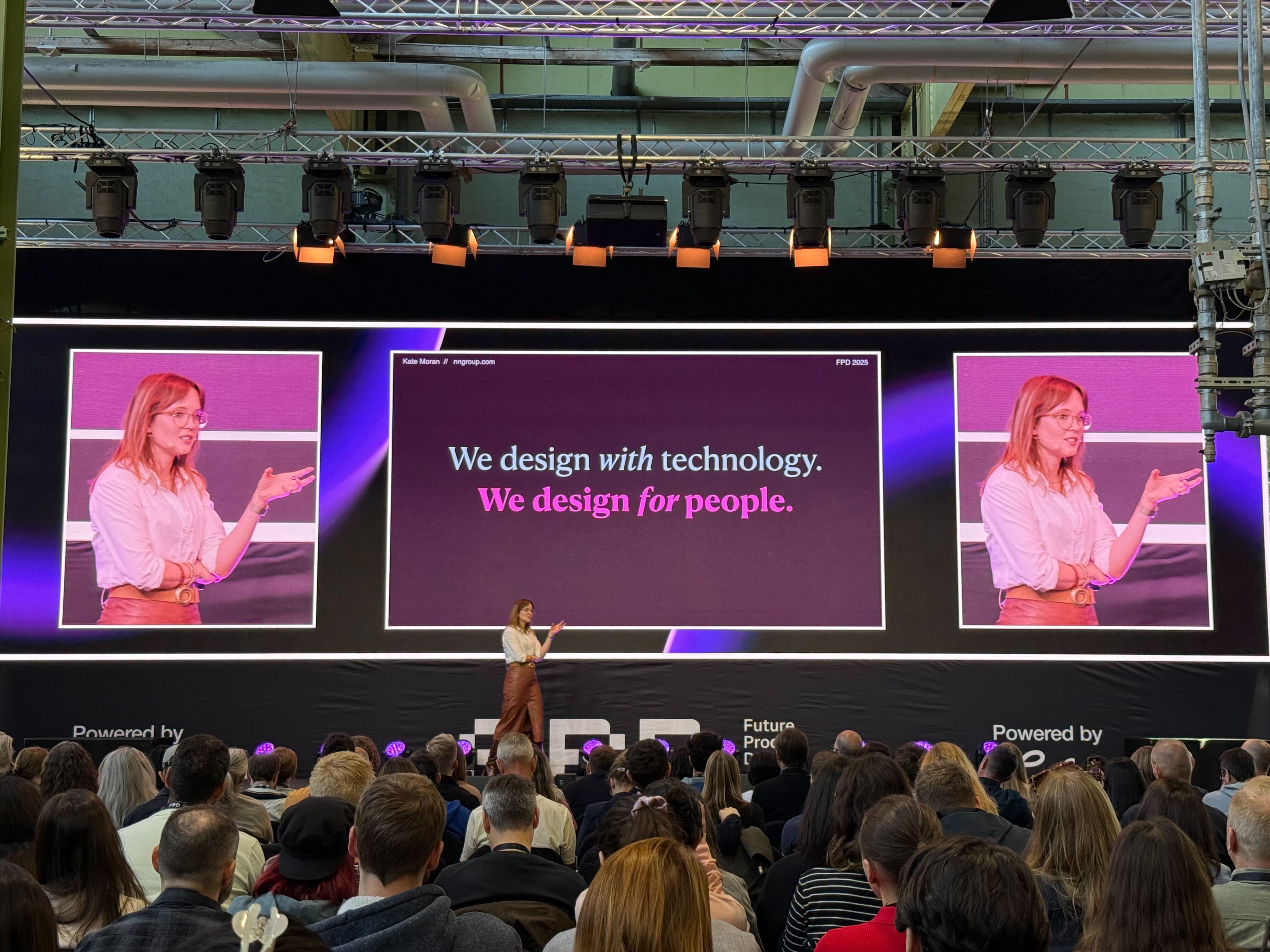
We visited Future Product Days 2025 in Copenhagen and learned from industry leaders how to design and solve problems while using AI as a tool. Here is a practical guide on what to do and what not do when implementing AI in your digital solutions.
“AI is not a silver bullet“
- Joacim Jeppesen – Framna, Introduction talk.
The biggest threat to successful AI implementation is not in the technology itself, but the adoption gap. Example on failures many companies do:
One area where AI is flourishing and being implemented extensively is search functionality combined with AI. It's no longer the future, it's the present. Users now expect intelligent, contextual answers, not just relevant search results. But successful implementation requires a deep understanding of users' mental models and information needs.
“We design with technology. We design for people”
- Kate Moran – NN group. The AI Adoption Gap: Why Great Features Go Unused.
Within the tech industry, many have already made the transition from traditional keyword search to more advanced prompting – that is, detailed questions that clearly describe what they need help with.
But your users aren't necessarily there yet. Many still struggle to formulate their needs in complete sentences and remain stuck in the ‘keyword stage’. They search with short, fragmented terms instead of describing their actual problem.
This is where design becomes crucial. Your AI search must be built for users as they are today, not for how you wish they were. The system needs to be intelligent enough to understand and respond to incomplete questions, while simultaneously guiding users toward better ways to communicate their needs. The key is to meet users where they are, not where you want them to be.
Complexity is constantly rising, and AI acts as an accelerator in this process. And to top it all off, in today's market, success with digital products is no longer optional - it's essential for survival.
“Higher cognitive load leads to more reactive decisions”
- Daniel Kahneman – Princeton University
This also applies to your users. When they face overwhelming complexity, they make hasty and poor decisions instead of thoughtful ones. That's why AI will transform how we work and live. Success belongs to those who use it smarter, not faster.
Keep it simple, stupid. By combining traditional UX knowledge with new research methods and a user-centred approach to AI, companies can create solutions that don't just impress technically but actually improve people's daily lives and work processes.
“Simplicity is a continuous resistance against the urge to add complexity”
- Joacim Jeppesen – Where is design and the role of designers heading?




Published 8. December 2025